The following is a letter I sent to the staff of the newspaper for which I'm faculty adviser.
It's the kind of letter I've had to send in the past.
Education for journalism is a journey — one with seemingly limitless adventures. (I do see a kind of predictability in it as the years go on.)
Names have been changed to protect those who, I hope, will do some serious thinking about what they do and how they do it.
Hi Bob,
I'm copying your editors on this because they were part of the decision to run the review you wrote about the Sarah Marshall film.
Let me start by mentioning that I got a call from the president's office this morning about your review. I was told of a parent who had read your piece and had some concerns about the angle you took on this film. (This is a parent who has a daughter attending Biola.)
The concern this parent had with your review was, first of all, that the Chimes paid for you to go see this film. Secondly, he wanted to know how the Chimes selects films to review — was the film making an important statement about life, society, current issues, etc.
He was troubled by what seemed to be an endorsement of this film as a must-see (he noted your five-star notation) — though he apparently missed your fairly pointed warning that this was not a film for everyone.
This is a man who doesn't understand the place of journalism in American society. He also doesn't understand that one student's opinion in a student-run publication doesn't constitute the university's endorsement of either the student's view or the film that student is reviewing.
His question was what separates the journalism of the Chimes — particularly in its film reviews — from the review of the Daily Bruin or the Daily Titan or any other university newspaper on a campus that makes no claim to knowing God.
I defended the Chimes as a publication that uses discernment.
But as I read your review a few more times, and when I saw the trailer on the Chimes' web edition showing (albeit subtly) the full frontal male nudity you described, along with scantily clad women, and flippant depictions of casual sex, I had to pause.
There is a problem here.
It's come up before — actually, on the film review pages.
It has to do with what the Chimes is all about.
The Chimes is a newspaper seeking to be as hard-headed and clear-eyed as any secular publication when it comes to tracking down the hard issues of life and exploring them.
I'm one of the more pushy of our Journalism faculty in this pursuit. What bothers me is that I seem to have been remiss. I've pushed the staff to explore the seamy sides of life, but I apparently haven't conveyed to the staff (and, frankly, I'm not sure you and I have ever met, Bob) that with our exploration of the darkness, there must be light.
We are nothing, our work is pointless — and, actually, a disturbing kind of delusion — if it's not grounded in the person of Christ.
And Christ is nowhere in this review.
Please don't stop reading. I'm not saying you should have woven the Four Spiritual Laws into this review. Nothing so stupid or artificial was what I had in mind.
What I did have in mind was the kind of analysis C.S. Lewis brought to the hard issues of life — sex, hate, pride, selfishness.
Your review, Bob, was too thin.
You gave the false impression that this film had something meaningful to say about human relationships in western society. You didn't point out the dysfunction, the emptiness, the loneliness of pursuing connection with others apart from the holiness of union that we find in Christ.
Film reviews in the Chimes don't have to be theological treatises.
But Biola is not just any school. It's a university that takes seriously the integration of faith and reason. That should go, as well, for the student newspaper that serves it. This review delves into a film using reason, but missed its potential in that regard; it also left readers empty of the faith implications of what these film-makers were saying.
R-rated films are an area of cinematic expression that should be approached cautiously in the Biola community. Students who come here expect a level of spiritual discernment in those entrusted with the media they pay for. As such, the Chimes has a high calling — to do journalism that's not merely factual and contextual, but that infuses its narrative with the presence of God.
I was disappointed in this review. I hope, Bob, that as you and your editors choose films to review that you'll be more judicious in your selection. There are films out there that are more worthy of the Chimes' funding and journalistic attention.
And should you choose a film for review that contains nudity, obscenity, or depictions that denigrate women and the sexuality God created for marriage, that you'll do so only if your review puts all of the above in a Biblical perspective.
And I hope, too, that you'll keep me informed of your decision to run such a review. My job as adviser is to offer advice. Because no one informed me, I had to be informed by the president's office — a blindsiding that helps no one.

About Me
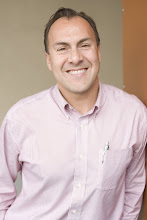
- MLonginow
- I'm a graduate of Beye School, Oak Park-River Forest High School, Wheaton College, the Moody Bible Institute (Advanced Studies Program), the University of Illinois in Urbana (M.S. in News Editorial Journalism), and the University of Kentucky (Ph.D dissertation on the interplay of higher education and journalism). I reported news for dailies in Illinois and Georgia, and have done an American Society of Newspaper Editors internship with the Grand Rapids Press (MI). Journalism matters to me, but the language of our swirling cultures in this nation is the biggger story and I have a passion for helping students "get it" when it comes to the faith perspective that underlies all good truth-telling, whether in newspapers, magazines, on television, on radio or on the Internet. I love my wife, I love my growing children, and I am learning to love California -- though I miss the green countryside of Kentucky (where I taught at Asbury College for 16 years) and the skyline view of Chicago's lakefront at night.

No comments:
Post a Comment