Fire.
It's been said you should never yell that word in a crowded theater. It's a word we fear so much that it constitutes speech that First Amendment scholars say is too powerful to be allowed in careless usage.
Smoke is in the air today, as it was yesterday. California is peppered with fires being driven by Santa Ana winds that seem relentless -- a surging sea of invisible gasoline on the dry landscape of this piece of land by the ocean.
I heard someone say today in an NPR interview that drought, the dryness of the land, is the Rodney Dangerfield of natural disasters. We're now giving natural disasters personalities and a sense of self-image.
How far we've come.
Marvin Olasky, shrewd and attentive historian that he is, has pointed out that there was a time in this country when journalists (and the rest of us who read journalism) looked at the tragedies of life -- ones we can neither predict nor avoid -- as acts of God, incidents with special eternal purpose.
Too many journalists today would look at that earlier era with a sneer. Act of God indeed. There's got to be somebody down here to blame. We'll just keep looking.
If neglect or intentionality -- malice aforethought -- caused these fires, may that truth come to light and justice be done.
But should the cause never be pinned down (and perhaps even if it is), we are wise to
re-think the nature of life and its fragility. So, too, should we realize that all this stuff we accumulate, the stuff we find we can leave behind as we run from the path of the burning embers, is after all not as important as our lives make them appear to be.
On our knees, helpless before the forces of nature, we find the place of real peace.
And our God, the one who stilled the waves with a word, is our only refuge.

About Me
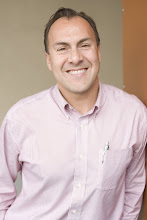
- MLonginow
- I'm a graduate of Beye School, Oak Park-River Forest High School, Wheaton College, the Moody Bible Institute (Advanced Studies Program), the University of Illinois in Urbana (M.S. in News Editorial Journalism), and the University of Kentucky (Ph.D dissertation on the interplay of higher education and journalism). I reported news for dailies in Illinois and Georgia, and have done an American Society of Newspaper Editors internship with the Grand Rapids Press (MI). Journalism matters to me, but the language of our swirling cultures in this nation is the biggger story and I have a passion for helping students "get it" when it comes to the faith perspective that underlies all good truth-telling, whether in newspapers, magazines, on television, on radio or on the Internet. I love my wife, I love my growing children, and I am learning to love California -- though I miss the green countryside of Kentucky (where I taught at Asbury College for 16 years) and the skyline view of Chicago's lakefront at night.
