His name is Jie.
It's the name he uses at Starbucks when he orders a drink — no smiling, no blinking. He makes the barista pronounce it back to him.
He's a Ph.D student in Economics at the University of California-Riverside. And he's learning about the United States by degrees. He's been here since last August.
I got his name from an organization that seeks people to practice English with visiting internationals at universities. And I'm learning more from him than he is from me.
Jie is from northern China, where they speak a type of Chinese that isn't spoken in all parts of that vast nation. In fact, he says, there many variations of spoken Chinese and he's amused at Americans who think it's all the same. Actually, a lot about Americans amuses him.
Greetings are funny right now — like "wussup?" He said that one stumps him. Should he say "good?" or maybe "yes?" He paused to ask my advice. I told him it's actually not a question. It's a figure of speech. But the proper response is to act like it's a question; but don't try to answer it. Just say, "not much."
He nodded, pausing, and I could tell he was taking mental notes.
Jie lives in an apartment with another Chinese student who is also studying doctorate-level economics. Ming-Ming is his name. And apparently he's brilliant — highest grades among new Ph.D students in his incoming class. In fact anything Ming-Ming does, he attacks with a vengeance, Jie says. It could have something to do with the fact that his right hand was injured when he was a newborn. It's a small, thin stump that's visible just outside the cuff of shirts he wears. Maybe kids teased him when he was young; maybe family made an issue of it. But it would appear that he's taken every opportunity to show he's capable of whatever comes along.
Jie said in a recent class session, a prof had noticed Ming-Ming's hand and had asked if Ming-Ming needed accomodation of some kind. The question angered Ming-Ming and he told the prof that he could write faster and better with his left hand than most people could with their right. Jie said he'd learned not to ask Ming-Ming if he needed help — with anything. If Ming-Ming needed it (and mostly he didn't) he'd ask.
I took Jie to Wal-Mart today. He said he needed to buy furniture. He said he'd considered taking it on the bus with him but decided it would be too awkward. He knew we had a van because we'd used it to take him to a Chinese grocery store once. (He'd called it "China Town" so we'd loaded up the van with my teenagers who love authentic Chinese food. Turns out it was just a plaza in Pasadena where a Chinese grocery and some boutiques were clustered.) I didn't hesitate. I was trying to build Jie's trust.
When we got to the store, I found out what Jie wanted was bookshelves. They were in a 4-ft box that weighed probably 80 lbs. I suddenly understood why hefting it to a bus stop would have been hard. He also wanted to exchange some headphones for ones that fit better. He'd gotten a defective pair. To make the exchange, he had to endure bad directions from a clerk, then had to wait in a fairly long line of people at the customer service desk. I noticed how cash register people treated Jie like a child when they heard his pronunciation of English.
In the van, Jie asked how my family was and I told him. He asked, in particular, about my 16 year-old daughter. I told him she was in love — with a baseball player at school who had just worked up the nerve to ask me if she could be his girlfriend. I told Jie I was waiting to chat with the boy after his team practice in a few days. Jie said he wished he'd had a Dad who had talks like that with him when he was young. In China, he said, the concept of dating wasn't practiced much. Arranged marriages were more common. He said it gloomily.
As we headed back to his apartment, he handed me a box of tea. It was Chinese tea specifically designed to lower cholesterol. He remembered that I was working on that.
When I dropped him off, I stopped in the apartment for a moment to say goodbye and he apologized for the mess. It smelled like rain had gotten in some windows and mold had set in. There were food-covered plates all over the kitchen table, pots and pans were on the reddish-stained stove with food caked on them. Our feet stuck to the floor as we walked. Jie said they'd not had time to clean up much (or eat, actually) over the last couple weeks. But they would now, he said.
As I was leaving, Jie got a call from his roommate who said he wouldn't be home for supper. Jie said he would make something for himself. He hadn't bothered to turn the lights on inside and it looked dark in the twilight. I shook his hand as we parted and it occurred to me that we were becoming friends. But it would be a friendship slowly earned.
The quiet of the evening was broken by soft music and a woman's laughter from an apartment in the vicinity of Jie's.

About Me
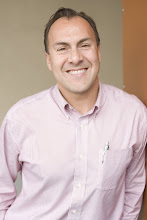
- MLonginow
- I'm a graduate of Beye School, Oak Park-River Forest High School, Wheaton College, the Moody Bible Institute (Advanced Studies Program), the University of Illinois in Urbana (M.S. in News Editorial Journalism), and the University of Kentucky (Ph.D dissertation on the interplay of higher education and journalism). I reported news for dailies in Illinois and Georgia, and have done an American Society of Newspaper Editors internship with the Grand Rapids Press (MI). Journalism matters to me, but the language of our swirling cultures in this nation is the biggger story and I have a passion for helping students "get it" when it comes to the faith perspective that underlies all good truth-telling, whether in newspapers, magazines, on television, on radio or on the Internet. I love my wife, I love my growing children, and I am learning to love California -- though I miss the green countryside of Kentucky (where I taught at Asbury College for 16 years) and the skyline view of Chicago's lakefront at night.
