
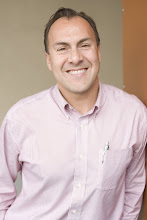
The following is a letter I sent to the staff of the newspaper for which I'm faculty adviser.
It's the kind of letter I've had to send in the past.
Education for journalism is a journey — one with seemingly limitless adventures. (I do see a kind of predictability in it as the years go on.)
Names have been changed to protect those who, I hope, will do some serious thinking about what they do and how they do it.
Hi Bob,
I'm copying your editors on this because they were part of the decision to run the review you wrote about the Sarah Marshall film.
Let me start by mentioning that I got a call from the president's office this morning about your review. I was told of a parent who had read your piece and had some concerns about the angle you took on this film. (This is a parent who has a daughter attending Biola.)
The concern this parent had with your review was, first of all, that the Chimes paid for you to go see this film. Secondly, he wanted to know how the Chimes selects films to review — was the film making an important statement about life, society, current issues, etc.
He was troubled by what seemed to be an endorsement of this film as a must-see (he noted your five-star notation) — though he apparently missed your fairly pointed warning that this was not a film for everyone.
This is a man who doesn't understand the place of journalism in American society. He also doesn't understand that one student's opinion in a student-run publication doesn't constitute the university's endorsement of either the student's view or the film that student is reviewing.
His question was what separates the journalism of the Chimes — particularly in its film reviews — from the review of the Daily Bruin or the Daily Titan or any other university newspaper on a campus that makes no claim to knowing God.
I defended the Chimes as a publication that uses discernment.
But as I read your review a few more times, and when I saw the trailer on the Chimes' web edition showing (albeit subtly) the full frontal male nudity you described, along with scantily clad women, and flippant depictions of casual sex, I had to pause.
There is a problem here.
It's come up before — actually, on the film review pages.
It has to do with what the Chimes is all about.
The Chimes is a newspaper seeking to be as hard-headed and clear-eyed as any secular publication when it comes to tracking down the hard issues of life and exploring them.
I'm one of the more pushy of our Journalism faculty in this pursuit. What bothers me is that I seem to have been remiss. I've pushed the staff to explore the seamy sides of life, but I apparently haven't conveyed to the staff (and, frankly, I'm not sure you and I have ever met, Bob) that with our exploration of the darkness, there must be light.
We are nothing, our work is pointless — and, actually, a disturbing kind of delusion — if it's not grounded in the person of Christ.
And Christ is nowhere in this review.
Please don't stop reading. I'm not saying you should have woven the Four Spiritual Laws into this review. Nothing so stupid or artificial was what I had in mind.
What I did have in mind was the kind of analysis C.S. Lewis brought to the hard issues of life — sex, hate, pride, selfishness.
Your review, Bob, was too thin.
You gave the false impression that this film had something meaningful to say about human relationships in western society. You didn't point out the dysfunction, the emptiness, the loneliness of pursuing connection with others apart from the holiness of union that we find in Christ.
Film reviews in the Chimes don't have to be theological treatises.
But Biola is not just any school. It's a university that takes seriously the integration of faith and reason. That should go, as well, for the student newspaper that serves it. This review delves into a film using reason, but missed its potential in that regard; it also left readers empty of the faith implications of what these film-makers were saying.
R-rated films are an area of cinematic expression that should be approached cautiously in the Biola community. Students who come here expect a level of spiritual discernment in those entrusted with the media they pay for. As such, the Chimes has a high calling — to do journalism that's not merely factual and contextual, but that infuses its narrative with the presence of God.
I was disappointed in this review. I hope, Bob, that as you and your editors choose films to review that you'll be more judicious in your selection. There are films out there that are more worthy of the Chimes' funding and journalistic attention.
And should you choose a film for review that contains nudity, obscenity, or depictions that denigrate women and the sexuality God created for marriage, that you'll do so only if your review puts all of the above in a Biblical perspective.
And I hope, too, that you'll keep me informed of your decision to run such a review. My job as adviser is to offer advice. Because no one informed me, I had to be informed by the president's office — a blindsiding that helps no one.
Wednesday, April 30, 2008

Sunday, April 27, 2008
Journalism is not what it used to be.
But then, what is?
Yet the changes happening to American journalism — newspapers in particular — have got some people panicked in sort of a chicken-little-the-sky-is-falling thing.
Try this one on.
In Saturday's Los Angeles Times,one of the biggest stories on the front page had the article starting somewhere in the middle (the lede and first few grafs were missing). Both my sons, neither of whom are avid newspaper readers — not of the front page, anyway — pointed out to me the oddity of what they were seeing. And I smiled.
I was glad they noticed. I told them it's a sign that somebody wasn't paying attention (I suggested heads would roll, but knew inside that probably wouldn't be the case.)
Should I have taken that moment to point this huge error out as a harbinger of a much bigger problem — evidence that the big ship is finally going down?
Look at it! AUGH! Right there in front of us!
Or one might put it in perspective.
Journalism, someone other than Ben Bradlee said, is the first draft of history. (He picked up on it and repeated it famously.)
First drafts are rough. I know. I've been grading stacks of them this semester.
Newspaper journalism, television journalism, radio journalism, blogs, Webzines — if they have any sense of inquiry about them, any desire to be timely, are bound to run into problems (layoffs of copy-editors notwithstanding).
So somebody in the layout area of the Times newsroom had a bad night Friday. Asleep at the switch? Sent the wrong file to the press room?
Nobody 'fessed up in Sunday's paper. I suspect the newsroom got some mail on this over the weekend. Come Monday morning when the non-weekend shift comes in there'll be some pointed dialogue.
But I suggest that the bigger deal in all this is that this newspaper hit the driveways and news-stands Saturday despite its little problem.
In so doing, this newspaper — the big package — did what it's supposed to do. It informed readers in Los Angeles and surrounding regions (like mine) about our world. It got people thinking. Hopefully it got people praying — for Christians are called to be watchful as well as intercessory.
And tomorrow's another deadline.
Will journalists get it right? Probably. And they'll probably run into some snags.
But journalism, bigger than any one front page on a Saturday, will roll forward — or so we should hope in this era of diminishing democracies.
Carpe diem.
But then, what is?
Yet the changes happening to American journalism — newspapers in particular — have got some people panicked in sort of a chicken-little-the-sky-is-falling thing.
Try this one on.
In Saturday's Los Angeles Times,one of the biggest stories on the front page had the article starting somewhere in the middle (the lede and first few grafs were missing). Both my sons, neither of whom are avid newspaper readers — not of the front page, anyway — pointed out to me the oddity of what they were seeing. And I smiled.
I was glad they noticed. I told them it's a sign that somebody wasn't paying attention (I suggested heads would roll, but knew inside that probably wouldn't be the case.)
Should I have taken that moment to point this huge error out as a harbinger of a much bigger problem — evidence that the big ship is finally going down?
Look at it! AUGH! Right there in front of us!
Or one might put it in perspective.
Journalism, someone other than Ben Bradlee said, is the first draft of history. (He picked up on it and repeated it famously.)
First drafts are rough. I know. I've been grading stacks of them this semester.
Newspaper journalism, television journalism, radio journalism, blogs, Webzines — if they have any sense of inquiry about them, any desire to be timely, are bound to run into problems (layoffs of copy-editors notwithstanding).
So somebody in the layout area of the Times newsroom had a bad night Friday. Asleep at the switch? Sent the wrong file to the press room?
Nobody 'fessed up in Sunday's paper. I suspect the newsroom got some mail on this over the weekend. Come Monday morning when the non-weekend shift comes in there'll be some pointed dialogue.
But I suggest that the bigger deal in all this is that this newspaper hit the driveways and news-stands Saturday despite its little problem.
In so doing, this newspaper — the big package — did what it's supposed to do. It informed readers in Los Angeles and surrounding regions (like mine) about our world. It got people thinking. Hopefully it got people praying — for Christians are called to be watchful as well as intercessory.
And tomorrow's another deadline.
Will journalists get it right? Probably. And they'll probably run into some snags.
But journalism, bigger than any one front page on a Saturday, will roll forward — or so we should hope in this era of diminishing democracies.
Carpe diem.
Sunday, April 20, 2008
Death is a moment when the world, through its journalism, has traditionally asked the question, as perhaps never before, "Who was this person — really?"
It's an interesting ritual — and an important one — for journalists. News media are devoted to the events that shape our lives — change, disruption, expansion, depletion.
Journalists have been called watchdogs, and when doing their job well, they are. For the journalist in our society is charged with answering the question each of us needs answered as the sun rises (or before it sets): "Am I safe today?"
For the journalist then, death, in some ways, is more important than birth. For it is at death that we as a people pause — for however brief a moment — and take account of what has been, of who has been. And in Western society, we move at a pace so fast as to forget to take the pause that reflects. Death is a natural pause, a breathing in when someone's last breath has gone away.
For some journalists, the question and answers behind the obituary are so enormous that selected staff are assigned the task of preparation — a journalistic version of the Pharaohs' pyramid preparations. Motion begins early, carving and laying stone-by-stone the edifice that will memorialize a man or woman. The words must be right, the research must be thorough. There was a time when obituaries for the great in Western society were an Art, a feature story genre reserved for the best writers.
Nigel Stark in the August, 2005 edition of Journalism Studies, says obituaries are making a comeback in the media of the U.S., Britain and Australia. Begun in 17th century England, they were a kind of in-depth literature in the 1700s, but fell into disfavor through the 1800s and into the 20th century. Yet even in the last generations, obituaries for the most well-known were a kind of artistic history — biography aimed at moments of tribute.
In such obituaries, the greatness of the person determined how early the preparation begins. Obituary spreads are a study in elaborate biography for men such as Winston Churchill, Dwight D. Eisenhower, John F. Kennedy, Martin Luther King, Jr., Pope Paul II, and for women such as Eleanor Roosevelt, Jacqueline Kennedy Onassis and Mother Teresa.
But obituaries are a limited outlet.
They are subject to the myopia of journalism that forgets the past or hasn't kept faith with the present. (Perhaps this is why, in the last few decades, the memoir has become such a staple of American book publishing. Those with access to a publisher — and such became amazingly simple with the advent of desktop publishing — tell their own life story and we snap these accounts up with a devotedness that's no less than astounding.)
One group that's been too long neglected in news coverage is Christians. Obituaries stand as one symptom of this larger problem in journalism. Obituaries for Christians — even when those Christians are women or men of some note, are too often badly done. Perhaps this is because for many news media outlets, the obituary draws on what used to be known as "clip files" — the collected reporting on a given person.
Christians don't make the news as often as they did before the 1920s. There are complicated reasons for that.
But an example of the phenomenon of neglected coverage of Christians is Clyde Cook, president of Biola University for 25 years beginning in 1982, who died in mid-April shortly after returning from a trip to do a funeral for a Biola alum. His death in his home in Fullerton, California was a moment that in many ways caused Christians across the world to pause in shock. Suddenly, a man they'd relied on for quiet example and leadership was gone.
Editors and journalism faculty are proverbial in their whacking off the word "suddenly" in any new writer's use of the word beside reference to death. Death, grumps the editor, is always sudden.
But we're drawn to the word because the cessation of life is so enormous — so final. We wish we'd had more warning. And in even cases where we've watched someone's life ebb away slowly, the end is still, well, sudden. There's a resonance — an echoing that makes us stop and collect ourselves.
The Los Angeles Times' obituary of Dr. Clyde Cook appeared Saturday morning, April 19 — the day people were departing airplanes in L.A. and pulling into Southern California freeways toward Fullerton and that city's First Evangelical Free Church. Clyde Cook had attended there. I remember. I'd been a visitor one Sunday as a potential hire at Biola to teach Journalism. Someone told me this was his church home. As I ventured into the lobby after the service, someone walked me up to him and introduced me. I'd be meeting with him the next day for the formal interview of a potential faculty member. He greeted me with a firm handshake and encouraged me to consider attending this church. He got a visitor's CD for me off a table and, with those deep blue eyes, encouraged me to feel welcome. It was almost deft, an "aw shucks" kind of moment. I'd known them in Georgia and in Kentucky. And here I was in California feeling it again. But in the Deep South, "aw shucks" could feel empty when it was over. Not with this man. He was there with you in ways few others were; yet he was the kind of leader who had a mind and soul capable of encompassing major portions of the planet.
It was that nuance in Clyde Cook that the L.A. Times missed. The obit, written by Valerie J. Nelson, hit on the usual topics: millions of dollars in endowment raised, thousands more students in the university enrolled, a revamping of the board of trustees and faculty to allow more women in leadership. He had taken steps to bring more ethnic diversity to the campus. He had signed off on change to the university's rules to allow social dancing off-campus by students.
But all of that was not Clyde Cook. It was part of the story, but not all.
What became interesting in this moment of death and reflection was how the Internet became a kind of echo chamber for this man's passing. Where the mainstream journalists lapsed, non-news writers stepped up and provided glimpses of the real story.
Editors of the Chimes Online, the Biola Web publication run by students, got verification of Clyde Cook's death in the hours after his passing and launched a blog soliciting the stories of those who knew loved the man. The outpouring was more than they'd expected.
And the university took notice, cooperating with the student media and furthering the discussion that was erupting all over the world, landing on the computer screens of those who knew him, those who wished they'd known him better, those who loved him.
Perhaps this is as it should be.
Journalists begin the discussion, James Carey once said, and from there, the conversation continues.
Perhaps the future of obituaries — and of all journalism — will be a hearkening back to a time when we gathered in public places and traded stories of one who is gone. On the Internet, we can gather from across space and culture; in that large space, journalism becomes only part of the larger moment that is communication of minds, hearts and souls.
It's an interesting ritual — and an important one — for journalists. News media are devoted to the events that shape our lives — change, disruption, expansion, depletion.
Journalists have been called watchdogs, and when doing their job well, they are. For the journalist in our society is charged with answering the question each of us needs answered as the sun rises (or before it sets): "Am I safe today?"
For the journalist then, death, in some ways, is more important than birth. For it is at death that we as a people pause — for however brief a moment — and take account of what has been, of who has been. And in Western society, we move at a pace so fast as to forget to take the pause that reflects. Death is a natural pause, a breathing in when someone's last breath has gone away.
For some journalists, the question and answers behind the obituary are so enormous that selected staff are assigned the task of preparation — a journalistic version of the Pharaohs' pyramid preparations. Motion begins early, carving and laying stone-by-stone the edifice that will memorialize a man or woman. The words must be right, the research must be thorough. There was a time when obituaries for the great in Western society were an Art, a feature story genre reserved for the best writers.
Nigel Stark in the August, 2005 edition of Journalism Studies, says obituaries are making a comeback in the media of the U.S., Britain and Australia. Begun in 17th century England, they were a kind of in-depth literature in the 1700s, but fell into disfavor through the 1800s and into the 20th century. Yet even in the last generations, obituaries for the most well-known were a kind of artistic history — biography aimed at moments of tribute.
In such obituaries, the greatness of the person determined how early the preparation begins. Obituary spreads are a study in elaborate biography for men such as Winston Churchill, Dwight D. Eisenhower, John F. Kennedy, Martin Luther King, Jr., Pope Paul II, and for women such as Eleanor Roosevelt, Jacqueline Kennedy Onassis and Mother Teresa.
But obituaries are a limited outlet.
They are subject to the myopia of journalism that forgets the past or hasn't kept faith with the present. (Perhaps this is why, in the last few decades, the memoir has become such a staple of American book publishing. Those with access to a publisher — and such became amazingly simple with the advent of desktop publishing — tell their own life story and we snap these accounts up with a devotedness that's no less than astounding.)
One group that's been too long neglected in news coverage is Christians. Obituaries stand as one symptom of this larger problem in journalism. Obituaries for Christians — even when those Christians are women or men of some note, are too often badly done. Perhaps this is because for many news media outlets, the obituary draws on what used to be known as "clip files" — the collected reporting on a given person.
Christians don't make the news as often as they did before the 1920s. There are complicated reasons for that.
But an example of the phenomenon of neglected coverage of Christians is Clyde Cook, president of Biola University for 25 years beginning in 1982, who died in mid-April shortly after returning from a trip to do a funeral for a Biola alum. His death in his home in Fullerton, California was a moment that in many ways caused Christians across the world to pause in shock. Suddenly, a man they'd relied on for quiet example and leadership was gone.
Editors and journalism faculty are proverbial in their whacking off the word "suddenly" in any new writer's use of the word beside reference to death. Death, grumps the editor, is always sudden.
But we're drawn to the word because the cessation of life is so enormous — so final. We wish we'd had more warning. And in even cases where we've watched someone's life ebb away slowly, the end is still, well, sudden. There's a resonance — an echoing that makes us stop and collect ourselves.
The Los Angeles Times' obituary of Dr. Clyde Cook appeared Saturday morning, April 19 — the day people were departing airplanes in L.A. and pulling into Southern California freeways toward Fullerton and that city's First Evangelical Free Church. Clyde Cook had attended there. I remember. I'd been a visitor one Sunday as a potential hire at Biola to teach Journalism. Someone told me this was his church home. As I ventured into the lobby after the service, someone walked me up to him and introduced me. I'd be meeting with him the next day for the formal interview of a potential faculty member. He greeted me with a firm handshake and encouraged me to consider attending this church. He got a visitor's CD for me off a table and, with those deep blue eyes, encouraged me to feel welcome. It was almost deft, an "aw shucks" kind of moment. I'd known them in Georgia and in Kentucky. And here I was in California feeling it again. But in the Deep South, "aw shucks" could feel empty when it was over. Not with this man. He was there with you in ways few others were; yet he was the kind of leader who had a mind and soul capable of encompassing major portions of the planet.
It was that nuance in Clyde Cook that the L.A. Times missed. The obit, written by Valerie J. Nelson, hit on the usual topics: millions of dollars in endowment raised, thousands more students in the university enrolled, a revamping of the board of trustees and faculty to allow more women in leadership. He had taken steps to bring more ethnic diversity to the campus. He had signed off on change to the university's rules to allow social dancing off-campus by students.
But all of that was not Clyde Cook. It was part of the story, but not all.
What became interesting in this moment of death and reflection was how the Internet became a kind of echo chamber for this man's passing. Where the mainstream journalists lapsed, non-news writers stepped up and provided glimpses of the real story.
Editors of the Chimes Online, the Biola Web publication run by students, got verification of Clyde Cook's death in the hours after his passing and launched a blog soliciting the stories of those who knew loved the man. The outpouring was more than they'd expected.
And the university took notice, cooperating with the student media and furthering the discussion that was erupting all over the world, landing on the computer screens of those who knew him, those who wished they'd known him better, those who loved him.
Perhaps this is as it should be.
Journalists begin the discussion, James Carey once said, and from there, the conversation continues.
Perhaps the future of obituaries — and of all journalism — will be a hearkening back to a time when we gathered in public places and traded stories of one who is gone. On the Internet, we can gather from across space and culture; in that large space, journalism becomes only part of the larger moment that is communication of minds, hearts and souls.
Subscribe to:
Posts (Atom)